DC Burn Pits 360 Congressional Update 4/30/2019

Visit to DC

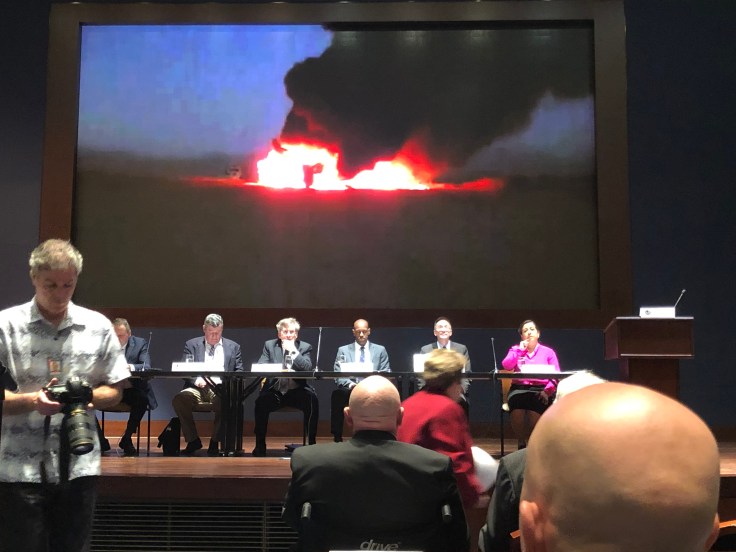
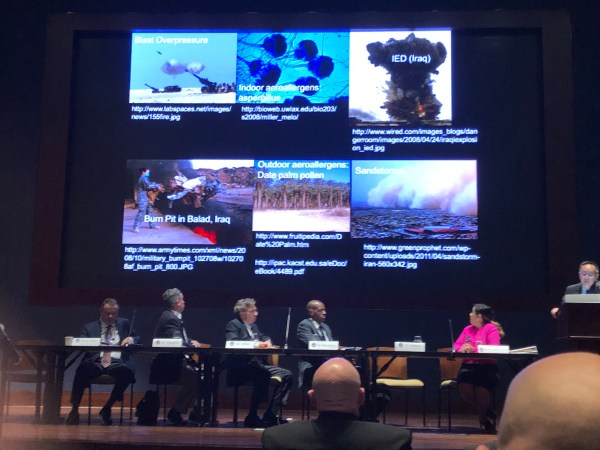
                This was an extraordinary visit to the capital. I drove to DC to meet up with an advocacy group called Burn Pits 360. This group is a small nonprofit from Robstown, TX that has been advocating for, among other things, elimination of burn pits, getting veterans accurate medical diagnoses, and disability compensations. They are seeking to expand their political footprint by training advocates across the country. My goal was to get a better feel for them and their organization. A second goal was to meet the veterans affected. I was confident I could find at least a few such veterans at a congressional update briefing that Burn Pits 360 was hosting.  The congressional update was by a panel of doctors and a lawyer that advise Burn Pits 360. 
                  Dr. Robert Miller, one of the panelists, was the first physician to tie in the diagnosis of constrictive bronchiolitis to soldiers over a decade ago. He gave his story in which he tells of how he worked to find a diagnosis in these otherwise healthy soldiers. These men had already undergone all conventional testing, which continued to show normal results. Dr. Miller took the drastic and unconventional approach of performing open lung biopsies. Every biopsy was abnormal, and the majority of these results showed bronchiolitis. He went on to explain that when he shared these results with the Army he was told to not share them. The Army went on to attack his credibility and the creditability of his results. Dr. Miller was told that if he shared these results with anyone that he would never be able to care for an active duty soldier again. Dr. Miller responded by publishing his data in the New England Journal of Medicine. 
                Dr. Anthony Szema, the same doctor who believes I have the same pulmonary injury as so many other veterans, was present and laid out the science of the pulmonary injury. He showed slides from soldiers whose lungs have been biopsied and which contained titanium, iron, and other heavy metals. Dr. Szema explained how these metals are vaporized in combat explosions, rendering them airborne to be inhaled. He also examined the results of military air sampling that the military argues do not pose a threat. He argued that the sampling was flawed and that even the data that has been collected does show evidence that the air affected by burn pits is dangerous. 
                Dr. Thomas Woodson, a new physician to the Burn Pits 360 team examined the socioeconomic impact of military burn pits. He reviewed the political impact that Agent Orange had and continues to have with the relationship between the United States and Vietnam. He also explained how hypertension in the military population has significantly exceeded the national average. Family members of those serving in the military have also been seen to have a greater degree of hypertension. 
                Dr. Steven Coughlin worked for several years as a senior epidemiologist in the VA department of Public Health. He published a paper in Augusta that examined how military cancer deaths supersede deaths from the larger group of veterans affected by bronchiolitis.  Dr. Coughlin left his position in December, 2012 citing ‘serious ethical concerns’. Dr. Coughlin has previously gone on record reporting that large scale studies are typically not released if the information in them does not conform to the message that the VA wants to show. He has also stated that when studies that could embarrass the VA are released, the data is manipulated in such a way as to make it unintelligible. 
                Kerry Baker, a lawyer with the practice Chisholm, Chisholm, and Kilpatrick shared how he has represented veterans with disability claims that the VA had denied. He detailed how in challenging the VA cases he has continually found that at least half of the cases he has fought could have been avoided if the VA would simply train its staff in the existing guidelines for handling veteran claims and then follow those guidelines. Baker has consistently found that the decision makers are usually nurse practitioners or physician assistants who have absolutely no background in treating the diseases about which they are making decisions of compensation. 
                In attendance at the update were several senators and representatives.  Before this update the panel had presented for SVAC (The Senate Veterans Affairs Committee). This has been the first time that these doctors have been able to present their data to Congress in a meaningful way. Previous meetings of this nature have only included information provided by the VA.

The POWER of a good story

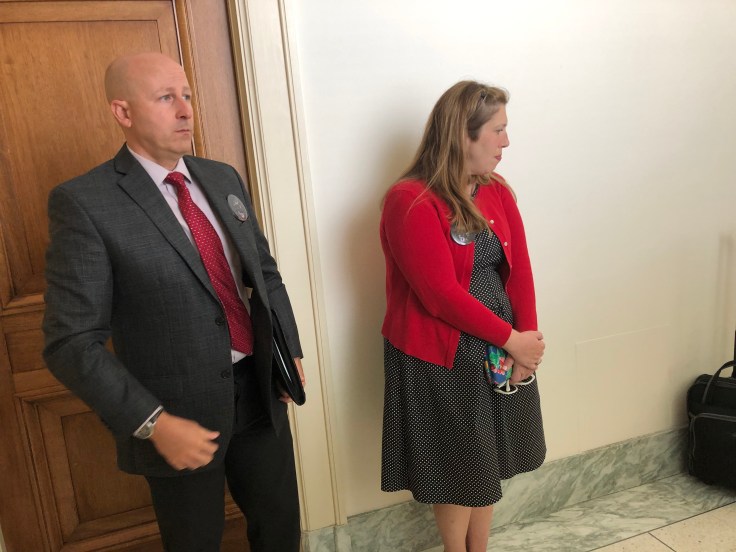
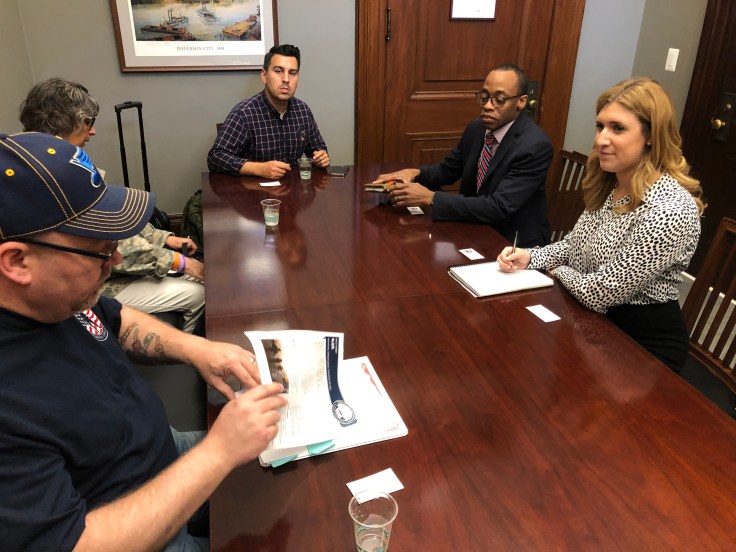
                   The following day a group of us went back to the Capitol building. We met with the staff of the Ohio 7th  Congressional District, Representative Bob Gibbs, Senator Roy Blunt of Missouri, and directly with Rep. Blain Luetkemeyer of Missouri’s 3rd District. There were many learning experiences for me. 
                “This is a bipartisan issue!” was one of few responses I remember directly hearing from Representative Luetkemeyer. Will Wisner, Program Manager for Burn Pits 360, laid out the argument for HR 1001 (Allowing family members access to the VA burn pit registry and the ability to add deceased soldiers) and HR 1005 (legislation to include constrictive bronchiolitis as a presumptive positive for receiving VA compensation and health care). He explained how there has been little Republican support for these bills so far. Explanations followed of how service members have been committing suicide, citing illness that no one would believe they had, and that he strongly feels this feeds into the high numbers of military suicide.  Will then asked those of us present to share our stories. Rocky, a former Airman shared his story of how he is still trying to find a doctor who can give a reason why he can’t walk and keep his breath, as well as why he gets intermittent mental fogginess. Susan shared about her son-in-law who is dying of a series of cancers. 
           I remained silent up until the point that Will asked me to share how I had come to be in this room. I simply recounted my story of progressive weakness and shortness of breath. I also added the story of my pneumonia from 2015 and that one of the Columbus doctors I know felt that my time in service would explain a lot to him about why that hospitalization had been so severe. I went on to add that examining statistics of sick veterans from Desert Storm/Desert Shield and assuming the same percentage of veterans becoming sick for current conflicts would could be around 1,000,000 affected service members. I explained that there was no way to know if this was an effective number but that there have already been over 173,000 service members who have become sick enough to register on the VA Burn Pit Registry. I also included that given it took 10 years for me to have any problems significant enough to be hospitalized.I inferred that the numbers of sick patients is likely to rise. Representative Luetkemeyer breathed out an exclamation, now looking visibly pale. He then acknowledged the intent of HR 1005. 
            Our meeting finished and we left. Will told the staff that he would be having a town hall meeting back in Missouri, to which the representative’s staff appeared to have a keen interest in how they could get him there. I reflected on how I had shared theoretical numbers that have no way of being verified and that it had been clumsy of me. This had also been my first time in such an environment. Still, having been a new experience I would say that it just means that there is plenty of time for me to learn how to improve.

           Since being hospitalized I have been up against being repeatedly told that I have no real problems or that my only problem is this asthma that none of my providers have been able to prove. More concerning to me has been the way in which providers have acted around me. There has been a good deal of attitude I have felt off of said providers. I have heard numerous remarks and direct statements about anxiety. One EMS recently told me “you just need a Valium!” This statement is now a running joke between my wife and I. For over a year I have felt a large number of providers looking at me like my problem is all in my head and that I simply just can’t handle emotions (despite working in an ICU with trained coworkers who have indicated a significant level of concern for my wellbeing). I recently started looking for a new primary care provider. My previous one smirked, rolled her eyes and explained to me that she knows that my problem is just asthma and that I ‘may’ be having panic attacks with them. She had told me that she could send me to get a broncho-provocation test. If she had been slightly more interested in considering anything I had to say she might have remembered that she and her partner had sent me to 2 pulmonary doctors and that I have had 2 broncho-provocation tests that cannot identify what has been happening. Ironically, I had just been trying to ask her for guidance on how to deal with a dismissive medical community. 
                Coming to DC allowed me to see people who have all had the same story. They have symptoms that no one knows what to make of and been told that their problems were either asthma, psychological, or both. I wonder how many veterans simply have faith in the system that tells them that they are the problem. 

                The night before I went to the congressional panel I spoke to a retired Green Beret. This former soldier had served in Special Forces and had been a Major. He had started to suffer from unusual symptoms that no one could diagnose. The New York Times ran an article about this highly trained officer was then told that he was having psychiatric symptoms and/or malingering. Retired Navy Captain Kevin Dorrance had finally been able to diagnose his symptoms as lead poisoning. I spoke to both of these former service members during this trip. The major had cited a significant concern: our current medical providers have a lack of intellectual curiosity. This statement had been made more bluntly in a separate article on Military.com. My passion to track down and speak to these two officers was sparked by that statement. It has been the perfect explanation for what I have dealt with and even explains behaviors I have seen in practice.
                I reflected on all of these thoughts and events as I drove home. For so long I have had to fight the feeling that I am the problem. Looking back at the expression and demeanor of Representative Luetkemeyer I realized for the first time how much power is in my story and the stories that these other veterans tell. Now the question is what to do with it. 

From Hospitals To The VA: Looking For Help (Part 1)

Last January is when I began to have episodes in which I couldn’t catch my breath. The first time I had two events in one day. At the beginning of the shift we were all being introduced to the new whiteboard we would have to fill out for our hospital administrators. I was trying to hang on for the explanation but suddenly felt a hot wave come over me and felt like I might pass out. I remember sitting in a nearby chair and that it was observed by a coworker who checked to make sure I was ok. Not having had any such problems before I thought that it was sleep related or a minor cold and shrugged it off as that I felt better a few minutes later. That evening I asked someone to watch my patients because I felt like I simply could not catch my breath despite not running around that much. I sat in the back managers office for about 30 minutes and still couldn’t stop breathing quickly. I have periodically had these spells after my chest surgery when it seemed like my chest was mad but I hadn’t done anything to provoke it this time. My manager wanted to take me down to the emergency room but didn’t find me particularly receptive to the idea. I later found out that a large part of her concern was due to the color of my face being as white as the bedsheets. I did go eventually (only under mild protest which I expressed through ardent refusal to be put in a wheelchair) but by the time I made it through triage I was back to feeling normal. The Physicians Assistant said she wasn’t sure what to do with me and asked if she should try IV fluids. I let her know that I came down it was out of respect for the experience of my coworkers but by that point nothing seemed actionable and I felt normal so it seemed fine to me to discharge and watch on my own. The ER doc came in and felt like it was a reasonable plan so he discharged me. I can still remember seeing the judgmental look of disgust from a male ER nurse as he watched me leave. I suspect he felt like I had wasted their time and room in this frivolous exam. Despite my immediate inclination to suggest he go impregnate a porcupine I decided to keep that pearl of wisdom to myself. When I returned to work I gave my manager a thank you card I had made in which crude stick figures of the two of us were walking to the ER. The figures were made on a slider so that the farther they went the more you could see one of them wishing the other would just get in the damn wheelchair.

The second trip the following month was more eventful. My pulmonary doctor had been telling me that I had a trapped lung related to a prior surgery and that it needed surgical intervention. His plan was to discharge me from his service and have his friend in a local hospital system open it up with an endobronchial ultrasound (EBUS) procedure. As I tried to set up an appointment I found out that I had initially been referred to the wrong department. Once I navigated through that issue I learned it would be May before I could even be seen. The previous pulmonary doctor had given me several spiriva inhalers and emphasized me needing to use them as well as prescribing an antibiotic called azithromycin. I had found one surgical textbook through our hospital library that supported the use of those two drugs in conjunction with surgery for the treatment of trapped lung. I also noted it said nothing about EBUS but seemed to point more towards another thoracic surgery. A few days later I found I was unable to move quickly, my heart was racing for everything I did (walking across the room) took me immediately into the 130s which I could hear and I had 7 episodes of not being able to catch my breath. I called a physician I had worked with who helped care for me during my hospitalization and asked him for his advice regarding if I should go to the same hospital I had been going to that already had my records or the other system where the EBUS wielding doctor worked. He told me to just come to the same system and that see what the could figure out.

I don’t think that my Uber driver particularly appreciated me using his services that day. He reminded me (several times in fact) that there was a closer ER around the corner. I politely thanked him and let him know I really needed the one I had asked for.

As I walked up to the reception desk I could hear my heart racing and I was gasping again. The intake nurse sent me back for vital signs and an EKG. Upon seeing that my heart rate was in the 150s (from the difficult task of walking 25 feet) and my respiration rate was in the mid 30s the ER immediately made me a sepsis alert and got me back into a bay. My new nurse (who was a real treat and needs to spend some time herself in a hospital bed) overheard me responding to the ER doctor’s question about my profession being in critical care. Her immediate two cents: “You work in ICU and you’re breathing like that? You should be ashamed of yourself!” If breathing had not been such a challenge for me I really felt like she and I could have a truly meaningful dialogue. I had told the ER doc between and through broken breaths that within a few moments I would likely be breathing normally again and sure enough I was.

The ER doc felt that I needed a cardiac work up due to my fast heart rate and would suggest a pulmonary consult to the admitting physician. During said cardiac stress test I had to walk up an progressively increasing incline with faster and faster speeds. About 7 minutes into it they had all the data they needed. It would initially felt good to be exercising again but I quickly went into another episode of gasping. “Do we need to call for help?” Asked one technician. “No, this is just my party trick” I replied. A few minutes later I was back in my hospital room and Catherine had just arrived. She quickly inquired: “What’s wrong with your hands?” I looked at them and they were a striking combination of white and gray. More fun.

Shortly afterwards I was greeted by Ed, a pulmonary doctor I have worked with for a while. This meeting was significant in that he was the first doctor to say:

“We need to talk about your exposure to burn pits.”

This had my attention. I had been asking for 10 years if if they might be a problem for me but that had always been dismissed as anxiety. I was so out of it that it was extremely hard to keep a focus or retain information.

Ed stated that he had looked over everything and was concerned about the burn pit history. He also did not agree with the trapped lung diagnosis:

“If you want to follow up with this surgeon you can but your lung opens up just fine and I have a very low suspicion that EBUS will do anything to help you.”

After my discharge home from I was looking through my online records. My cat scan of my chest showed all of the holes in my chest that had been made in it like a fingerprint. The third entry caught my attention:

‘Diffuse mosaic attenuation’

Not having seen this reading in any of my patients I looked up related conditions:

-pulmonary hemorrhage

-chronic pulmonary embolism

-constrictive bronchiolitis

Seeing the third entry I immediately felt like I had been hit by a wrecking ball.

********** (Looking back at all of this)

There are many kinds of doctors. Some are great. Some need to retire. I’m not interested in attacking my first pulmonary doctor but a few things about his office trouble me:

1: I seldom saw his face. I have a distinct memory of what the side of his head looks like. He almost always spoke to the computer.

It would be easy for me to blame him for treating the computer before me. In reality I think it is more likely a symptom of our fractured healthcare system. Doctors are over booked. Insurance demands notes be typed with certain metrics. People become cattle.

2: There were multiple posters and magnets for Spiriva. I don’t know if his office has a financial agreement with them or not. I did find spiriva as a treatment recommendation in a surgeon textbook. It just doesn’t sit well with me.

3: The performances his nursing staff was underwhelming.

-When the first nurse I met there asked me if I knew how to use an inhaler I immediately thought back to my first time picking up a rescue inhaler at a local but national drug store. I remember asking them if I needed a spacer to which I was told I did not (all of the respiratory therapists I work with would be cringing or yelling right now.) I later looked it up online and saw that the recommendation is to breathe in slowly over 10 seconds and hold your breath for another 10 seconds, then wait 1 minute before next dose. I decided to see if she had anything to add. She simply looked at me like I was an idiot, pointed the inhaler into the air and sprayed it. Pathetic.

-The nursing staff tried to document my blood pressures in the hypertensive range. Many nurses try to take blood pressures as if it is a race. I’ve seen this act before. The one that day recorded that I was 135/127 or something close to that. The practitioner in the office that day wanted to speak to me about hypertension. I reminded her that having a number like that was physiologically impossible unless I was in an unusual condition like cardiac tamponade in which case my blood pressure should be dangerously low. She repeated the reading herself and came up with 115/75. My normal reading.

There are all kinds of nurses. I got a feeling from the attitude of these nurses that they either didn’t want to work or wanted to be working in a hospital where their real futures would await them beyond their outpatient occupational purgatory.

Purgatory can keep them. As long as they work like that I don’t want them anywhere near my patients.

Something That Might Put It Together

I had already been keeping myself entertained with texting in laws. They had asked how I was doing to which I responded that instead of feeling like I had been hit by a pickup truck I now only felt like I had been hit by a cachectic octogenarian riding a Segway. This was met with immediate demands to know if they had found the person who did this to me:

As well as their response:

It’s such a warm and fuzzy feeling to know that there are those willing to indignantly do violence on my behalf. I was in the beginning of another one of my favorite parts of this process: recovering my energy. Yay.

I learned after surgery a few years ago that recovery can be as trying as time in the hospital in its own right. I have to fight getting frustrated about not being able to do things I could just a week before. Every task seemingly requires more energy than it used to. When I spoke about this with my pulmonary doctor he told me that it is important to push to a certain extent. He in no way seemed to be advocating for being reckless. He just explained that without pushing the limits I would not regain lost strength and that everything would remain more difficult.

Of particular interest regarding my current pulmonary doctor: this is an individual who I had worked with a few times while assisting our trauma hospital. I didn’t know him well but we immediately recognized each other during my first appointment. He immediately impressed me with how he made time to listen to my concerns and remained engaged (a stark contrast from my previous pulmonary doctor.) I also learned that he was classmates with the doctor that is the director of the department I work in. When I commented about it to the doctor I work with he immediately showered the pulmonary doctor with praise. Apparently this pulmonary doctor had been top of his class in an Ivy League school after graduating with a separate degree that he later abandoned in order to take on a new career helping people. As with most answers from my director to my inquiries: specific examples and citations nearly in APA formatting were given.

Trying how to figure out how to push oneself without going overboard is proving challenging. The simple act of making it through a shift is trying. During the first few days I have frequent spells of dizziness, lightheadedness and room spinning. As I occasionally check my heart and oxygen rates I find my heart is racing to keep up. I get frequent inquiries if I am ok. It’s hard to say everything is fine when my face is either pale or flushed which even my patient families are now bringing to my attention. While my first inclination is to push through everything and say nothing is wrong it would not placate my coworkers who are ALL trained in critical care. You just can’t get one over on them.

While resting at home I had been considering how to deal with the seemingly frequent response that my issues are anxiety driven coupled with exercise induced asthma with bronchospasms (periods in which I have more difficulty breathing than usual) that so far no one has yet been able to prove. It occurred to me that having seen this response several times now it appears to be part of how the medical response game is played. I also started thinking about how I could find a way to change the game as that my ability to effectively argue anxiety while struggling to breathe would be near pointless. That got me to thinking about looking into how other veterans might be responding to clinicians telling them that their breathing troubles were psychiatric.

I found a military times article that quoted a doctor from New York arguing for more invasive testing of pulmonary compromised veterans. He points out that in absence of getting a pulmonary diagnosis clinicians are then left to psychiatric approaches which is inappropriate. My heart fluttered for a moment reading that and I don’t believe that it was because of breathing troubles this time. The article also stated that the same doctor feels that many veterans are being incorrectly diagnosed with asthma and exercise induced bronchospasms. Another flutter. 4 items were listed to assess including checking a 2 mile run time from before deployment to after, allergy testing, fractional exhaled nitric oxide testing and impulse oscillometry testing with the conclusion that irregularities in those area may suggest need for a lung biopsy. I already know that I have problems with the first two items and had no knowledge of what the other two tests are let alone having had them. I decided to look for any scholarly articles by this doctor on this topic.

An article from the doctor quoted, Dr Anthony Szema, was readily available and in a strange twist of fate I didn’t have to pay anything to read it. Its assertions were that pulmonary damage appeared to be related to burn pits, sand, and IED (bomb) blasts. A test was cited stating that this team has been successfully able to duplicate similar pulmonary symptoms to my own in lab mice. The segment on allergies bore a number of similarities to my own allergy testing. There was a more comprehensive list of items to assess veterans at the end. The ninth item was a recommendation to encourage veterans that their symptoms are not psychological. Also included were two potential treatment options of unknown human efficacy. A separate paper cites on of them increasing respiratory functions of the affected mice.

My present plan is to first take this I formation to a few trusted individuals to see what they think. I feel that as an experienced ICU nurse I have a decent ability to critically analyze an article. At the same time I am aware that I have strong emotions and a desire to have a definitive diagnosis and plan. It would be ideal to make sure that my desire for answers isn’t overriding my better judgement. I also decided to take advantage of the counseling services my organization offers. I started to feel more and more that if I could show a willingness to explore the idea of anxiety I might be able to get more consideration towards other diagnoses from more open minded clinicians. It might take at least one bullet out of the chamber to those who would be more dismissive. It also might be helpful for me as that this shit is pissing me off.

**********

Dr Google is a dangerous consult. It is easy to read into cases that don’t pertain to you. You might read about a treatment that another patient had whose kidneys failed and needed dialysis. You then realize that you have kidneys and you don’t want to need dialysis. Further scrutiny frequently reveals that the patient was on their way to kidney failure already. If you want to drive you doctor into early retirement then frequently site google in response to treatment options. I use the internet frequently in my work and feel that I can effectively navigate it for my patients but I do have to consider the risks of navigating it for my own health as that my objectivity could be compromised. While taking into account this concern I also have concerns that if my trouble is service connected then I would belong to a small subset of the population.

Veterans and service members account for a small portion of the living US population. Most recent estimates appear to be around 7%. Of that many service members have not deployed. Of those who have deployed an even smaller percentage of individuals report difficulty breathing. Acceptance of new medicine is based largely on groups that an be studied in large enough quantities to reproduce results. Peer reviewed double blind studies tend to be the preferred standard. I find it reasonable that doctors have difficulty recognizing new problems that have not been widespread enough to observe. To make matters more challenging: if a patient is improving then we frequently have less cause to keep working them up.

Few people want a test that they don’t need. Reputable doctors don’t want to order unnecessary tests either. If a person seems like they are improving or at least aren’t getting worse then most doctors I know are going to want to wait until the patient deteriorates enough to warrant more aggressive testing. When I was hospitalized for severe pneumonia a few years ago the doctors knew relatively quickly that I had pneumonia and fluid in my chest. An argument could be made that they could have figured the nature of my pneumonia sooner if they had stuck a needle in my chest and pulled out some of the fluid for testing. Doing so might have made my hospitalization a little easier but that same needle could have failed to show anything important while risking me for bleeding, infection and a collapsed lung. Sometimes it’s hard to know when to pull the trigger on more aggressive tests and treatments.

**********

Burn pits in military combat zones ran constantly. I never was in them but always around them. The smoke and fumes that they produced would slowly waft over everything around them and one quickly learned to get used to them. Whenever I was riding on a Blackhawk or Chinook I could tell by the smell that we were almost there (coupled with a smell of rotting waste akin to an overloaded porta potty.)

I never had the privilege of burn pit detail. Other soldiers would comment about how individuals charged with keeping out hazardous items would throw lithium batteries into the flames to watch them pop. Reports include burning of plastic bottles, hazardous materials, medical wastes, styrofoam and anything else available all by using jet fuel as an accelerant.

Sand in Iraq is unlike American sand. It’s so fine it’s like walking through confectioners sugar. It gets into everything. A recent study found that Sand in Camp Victory in Iraq had titanium as well as several other metals on an extremely small level. Since adding it as an inclusion factor it has been found in the lungs of affected veterans. Diagnosing it is problematic as that it reportedly requires an electron microscope which is not commonly available. Current speculation is that the metals and sands are rendered airborne via anything from sand storms to vehicles driving through and stirring it up.

Improvised explosive devices are the most current link under scrutiny, particularly in soldiers with traumatic brain injuries (TBI.) Diagnosing TBI after the fact seemed problematic in 2005. VA physicians had to rely heavily on what you tell them (subjective data) while lacking physical evidence (objective data) as that it is often months after the fact and no imaging at the time was capable of offering visible data. Various articles state that previous blast injuries clinicians evaluate would involve significant trauma like pneumothorax (air in the chest but outside the lung that causes the lung to collapse.) Recent theories are that blasts can damage the alveoli (tiny grape like clusters where oxygen and carbon dioxide enter and exit the blood.) The incendiary chemicals like phosphorus are also noted to be of concern to pulmonary tissue.

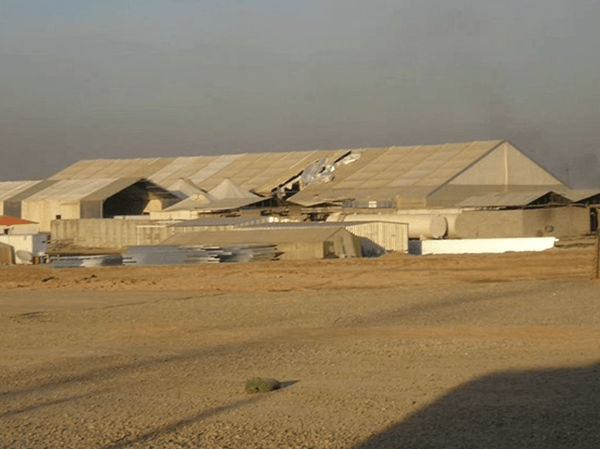
(The above should image is from our base FOB Marez. The sand surrounding it was part of our half mile trek for food each meal. The chow hall was destroyed before Christmas, 2004 by a suicide bomber whom detonated at lunch time.)

This article is the only one I am aware of that takes all of the abnormalities I have and puts them into 1 potential disease presently being coined “Iraq/Afghanistan War Lung Injury.” The available articles I have been able to access don’t presently hypothesize as to the overall morbidity or mortality. Successful diagnosis appears to require a lung biopsy which is where veterans like myself seem to fall into a catch-22. I am not sick enough to meet any present widespread standards that a physician would want to refer me to a cardiothoracic surgeon. Few CTS surgeons would want to perform the said biopsy without a clear and accepted indication. Even if I can find someone to do it I would still have to find a way to get insurance to pay for it. I would really like to not have any of these episodes at work as that it would put me out in front of my coworkers in a position in which I wouldn’t be able to take care of myself. I also don’t like the idea of putting them into a position in which they would have to clinically help one of their colleagues. At the same time I look back at not being able to move my hands and everything appearing blurry and ask myself if I would rather have the next (and at the current trajectory probably worse) episode at home or surrounded by people who can handle breathing events.

**********

To my colleague: thank you for being willing to help me out as I’ve been working through this. I know many of you want to move on to higher level skill jobs like NPs but this is the only place I want to be. You all being willing to help me out has made it possible for me to keep doing what I love. At the same time please be aware that I recognize that it takes extra work for you to do that. It’s a hard admission to need help and makes my pride hurt a little but I truly am grateful. I don’t like the position it puts all of you in; I highly value pulling my own weight. If it comes down to it I am prepared to move on.

From Dehydrated To Functional (follow up to “You Seem Worked Up)

One breathing treatment and trip to the ER later I didn’t feel much different. As we exited the vehicle into the cold night air a fresh wave of nausea came over me and I started to shiver again. This time without numbness or tingling. We entered into the ER and I quickly had a small host of new friends mobbing me. The medic changed the stretcher into a chair. I was about to exit when a sudden wave of nausea took me over the edge and I began to violently get sick. One nurse took my bag and offered me a new one with a suspicious look in her eye. A moment later she announced: “Well, this is crystal clear guiac positive.”  Guiac positive is a bedside test that confirms the presence of blood in fluids.

I slowly hobbled over to the ER cart (think army cot makes a poor attempt at a lazy boy arm chair) and got in. Lots of nurses were asking questions from different directions. One asked me for my name and date of birth just as another nurse had stuck a thermometer in my mouth. I immediately thought of how when I am one of the nurses mobbing new patients I ask them their name and date of birth while someone is taking their temperature and then explain that I am training to be a dentist, one of my ice breakers.

A respiratory therapist came in and promptly scolded me for breathing too fast and hard. She quickly relieved us of her presence at which point my night slowly started to improve. Nurses now set themselves to establishing IV access to get labs and give fluids. Typically people can get IVs into me in half of a second but this particular night took 2 nurses and 4 attempts. They all apologized for not being able to get a line into me sooner to which I replied that being poked wasn’t a ranking concern to me. At some point during all of this the ER doctor came in to interview me himself. I was having another gasping episode and trying to answer everyone’s questions so he made a quick exit and I never saw him again. I was able to let him and the nurses know that in addition to my usual party trick of not being able to breathe well I had recently started allergy shots and show him a photo of the screening results so he could decide if he needed to be concerned about it at all.

About an hour and a liter of IV fluids later I started to feel like a human being again. Given the concern for me and active bleeding the staff had told me they were tentatively planning on sending me from their stand alone ER to the larger mothership hospital for a GI consult and for fluids. My blood counts were all coming back abnormally high (red blood cells 6.18 with a normal range of 4.5-5.9 and hemoglobin of 18.1 that would normally be 13.5-17.5). More notably my lactic acid level (aka lactate) was elevated from a normal range of 0.6-2.0 to 3.3.

This revelation coupled with a new low grade fever got me another liter of IV fluids as well as a continuous IV fluid infusion. The bedside nurse was really driving the process; she made certain that the doctor knew that my lactate was up. She also made sure that I had IV fluids going. Many times the ER doctors will hold a patient for IV hydration but then wait for the receiving units to start the said hydration. My nurse wasn’t certain how long I would be with them but she didn’t make sure that I wouldn’t have to wait for treatments to start.

Other results started to come in  my first cat scan didn’t show any bleeding anywhere but didn’t get the clarity that they had hoped for to rule out pulmonary clots so I was awarded a second cat scan that later cleared me of that particular concern. I had been texting back and forth with someone during the night and noted that I would be shocked if it were to be a clot as that my risk factors tend to be so low that they would be negative numbers.

The transport medics arrived and in a strange twist of fate the lead medic was an individual whom I had sent numerous patients from my previous hospital job to their respective rehabs. We bantered on a little bit as we made our 3am journey to the mothership.

The rest of the morning was relatively uneventful. I slept very little, as is common in the hospital. Morning labs had shown a 4 point drop in my hemoglobin but it was felt that was due to me being so dehydrated. The GI doctor came in and stated that he felt I did not have true GI bleed and that we could avoid sending an scopes throughout my innards. Apparently wretching can cause small amounts of bleeding that can trigger positive guiac results. There had been intermittent concerns about bleeding due to my taking large dosages of ibuprofen for my foot but he felt this wasn’t a concern. I was fine with this notion. The primary physician team offered me the option of staying another night but I felt that given I could now keep fluids down I was fine with going home. The hospital was probably better served by having someone who needed to be there in that bed and I no longer needed it.

***********

One of my ER nurses made a comment upon reading my records and seeing that I work in critical care:

” You having to ask someone to call the squad and help you must have been hard.”

It’s so nice when you feel like someone gets you. I really do have better ideas of how to spend the evening that don’t involve a sudden ambulance ride to the ER in front of my family and neighbors (and later being billed for it.) I later found out that as I was walking with the medics into the back of the squad one of the neighborhood girls my son likes to play with became distraught over it. It seems she had been staring nose to glass out the window and upon seeing me became panicked and bolted out the front door blurting “It’s Paul! It’s Paul!” This was quickly countered by her parents: “If he’s walking then he’s ok! Get back inside; you don’t have a jacket on!” I think something that we in medicine forget is that most of our patients asking for help don’t want to be there. This is made more difficult by frequent flyers who DO want to be in the ER but feeling like you are being lumped into their category is extremely frustrating. I didn’t feel like I had that much of a vibe off of my providers this time but it has felt that way in the past.

I don’t particularly like the idea that simply going up 2 flights of stairs when I feel sick might be a cause if this type of reaction. It would seem out if the realm of possibilities except for the fact that this evening happened.

“You Seem Worked Up”

On Thursday I had yet another adventure with hospitalizations brought on by a pair of lungs that just aren’t doing what they ought to do. I had already been hobbling around the house in an awkward boot due to breaking my toe on the coffee table. Our kids had both been sick from contracting a pretty funky GI bug. Poor Rowan had been carrying a bowl with him everywhere for each time he would get sick and was moving considerably slower than his usual two speeds of fast and faster. My wife Catherine was already starting to feel ill and I was hoping to avoid it but questioning how long that luck would last.
I had felt completely fine throughout the day until the early evening. I quickly found myself succumbing to a massive wave of nausea that confirmed it was time for me to take my place among his the ranks of my sick family members. We had anti-nausea medicine in the house so I attempted to use some of it but found it to be of no help.
About an hour later I got sick again. I then felt the altogether too familiar sensation of breathlessness returning. Feeling abnormally out of breath I decided to use one of my inhalers. Sometimes I feel relief quickly but this time seemed different. I told Catherine that I needed a few minutes. Remembering that our children needed blankets that  night I briefly took a trip to the basement to switch the washer load to the dryer. I then went up to the second floor to lay down for a few minutes.
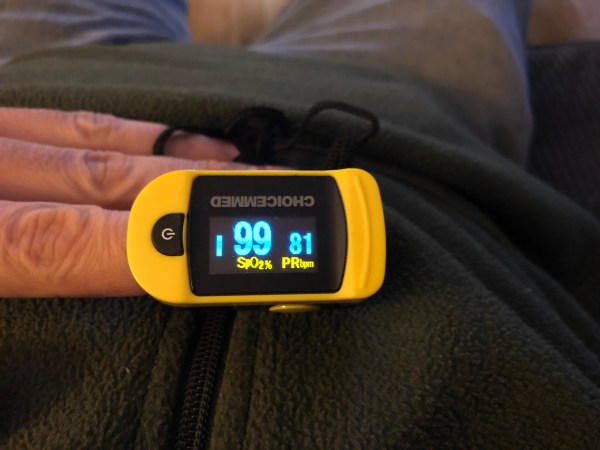
Upon reaching the foot of my bed I felt a sudden and jarring spell of difficulty breathing come over me.  There was an old pulse oximeter lying on the table nearby from my missions kit that Devlin had been happily swinging around earlier. I put it on noting the sudden pallor of my hands and saw the numbers come back at 85%. The numbers continued to decrease until they said 79.  My first thought was having trouble believing that the numbers were real. Most people I have seen with numbers like that (should ideally be above 92 for my age) have not been conscious. Suddenly I started to feel cold and felt my fingers going numb.  The world was also starting to seem fuzzy.
I reached for my phone and texted my wife ‘blacking out’ hoping that she had it nearby. As I did that I sat on the foot of our bed and laid back.  I suddenly felt colder than I can ever remember feeling in my life. My hands started to shiver violently and were tingling more and more with numbness.  I tried to bend my right index finger and now found I couldn’t. Curious if it was still able I gently pushed on it with my left wrist and it easily closed into a fist. I just couldn’t move my hands normally.
I have had moments of tingling with previous episodes of difficulty breathing. I had always been told it was due to breathing too rapidly and not having enough carbon dioxide left in my blood as a result. I tried to slow my breathing but found I was completely unable. It felt like I had just sprinted half of a mile. Laying back seemed to help a little as the world started to refocus. About this Catherine walked in and asked what was going on. Between gasps I managed to blurt in broken phrases “can’t” and “breathe.” Catherine asked if I needed EMS to which I nodded yes.
As Catherine called for a bus I started to feel better. The numbness and tingling were going away and I could use my hands again.  I tried standing up and saw that I now could normally again. After a moment I told Catherine that I was going to wait for the squad downstairs in our living room. She immediately inquired about the wisdom of moving given what had just happened. I told her I felt semi normal for the moment and have found in past episodes that the weird stuff typically hits in windows.  I wanted to try to get myself to an area that didn’t have to navigate the stairs later when I might have more trouble again.  She didn’t stop me though I suspect that still made her uneasy.
EMS was at our front door in less that 5 minutes. Catherine let them in as Rowan tried to watch. Rowan watching was not my first choice but Catherine said he would be fine.  The lead medic started asking me questions and I answered in broken phrases between breaths. He asked if I  any medical history.  Through previous events I have learned it is easier to keep that info in a note on my phone so that it is accurate, immediately available and one less thing for me to try to verbalize while having trouble speaking. I immediately got a feeling from the medic that he felt it was strange that I had this info already typed up.  I watched his eyes move down the list. As he got to the last entry(PTSD) I immediately saw his head cock back  about 5 degrees, his eyes winced slightly and there was a small but simultaneous inhalation seeming to indicate that everything made sense to him now.  He let me know that on his oximeter my oxygenation was 100%. He commented: “You seem worked up.”
Catherine quickly said to the medic “this isn’t what he looks like when he’s worked up.  He’s just struggling to breathe.” I could feel the medic watching his pulse ox reading of 100%. He responded: “Here’s what we can do. I can give you a breathing treatment but then I have to take you to the hospital.” I thought back to the last time I had felt like this and had a cat scan that showed air trapping despite the 100% reading I had at that time. I elected to go to the ER. I knew that it was the right response but as I answered I could feel my pride taking a hit.
****************
Working with patients is often difficult, particularly in acute care.  They are frustrated by the fact that their bodies don’t work the way that they should.  They often have a longing for their varsity days in which they could do more that now remain a distant memory.
Having been through this a few times now I have had plenty of chances to see the 100% on my oxygenation and have caregivers determine that this means I must just be having an anxiety attack (this is not a blanket statement; some nurses and most doctors appear fairly good about not doing this) I wonder how these folks would feel if they had been out with our unit in Mosul doing presence patrols, searches for high value targets and in active combat.  I don’t want to seem like I am setting up the medic as a villain; anxiety is not an unreasonable consideration.  I do want to suggest that I think we in the medical field jump to that conclusion a little too quickly. It should be one that we settle on after we have ruled out other options. I have seen too many times in which it did not appear to be a diagnosis of exclusion (I have been guilty of this too).  While giving this matter a lot of thought I remembered something: if a person is struggling to breath then would it be normal for them to not seem anxious? How many people would respond: ‘Well I can’t seem to catch my breath and my chest under constant pressure as my airways burn. What time does the game start?’ As a caregiver that scenario would seem ludicrous to me but we seem too frequently to have varying degrees of this expectation from our patients.
I wish to express nothing bad about the EMS workers in any way. They were exceptionally fast, they were professional, they got me to the ER , and they never treated me disrespectfully. If my oxygen levels did drop they would be available to help me.  Those are biggest concerns I can ask for during a singular event. At the same time I am in a position in which my ability to breath has been slowly but steadily declining and is only now starting to show itself in ways that can be measured. It is concerning and frustrating to have to justify myself as having something legitimately wrong while attempting to breath. Even if everyone acts with courtesy and professionalism I have to wonder: are people missing things they might otherwise catch if they hadn’t already settled on the easiest answer? Fortunately, I have had some wonderful care providers that have kept open minds and it has been enormously helpful during this process.

Blog at WordPress.com.

Up ↑